
You want a basement that fits how you live in Colorado Springs — dry, comfortable, and useful year-round. This article helps compare practical finishing options so you can choose what matters most: moisture control, warmth, sound, durability, or style.
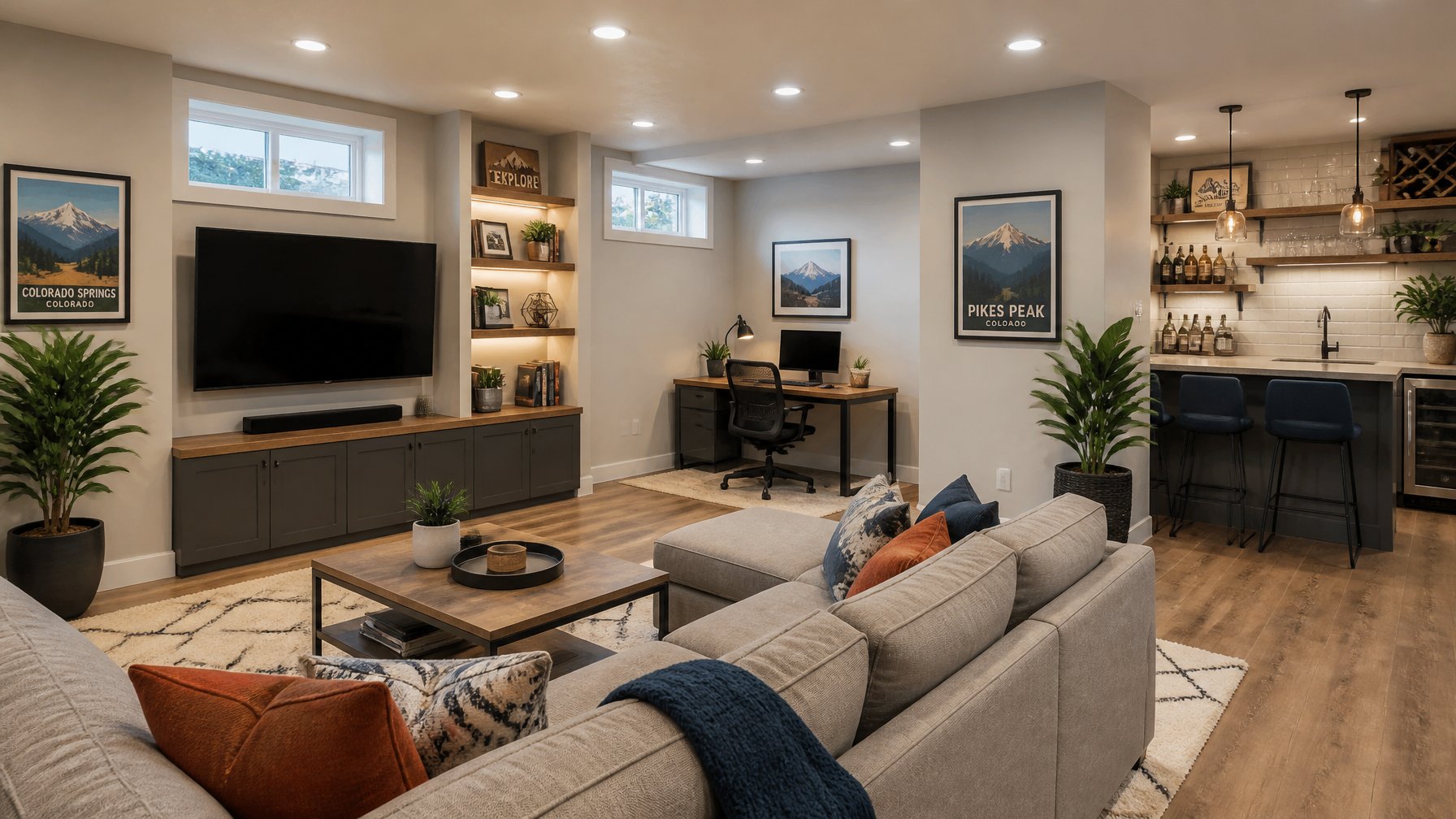
They will weigh tradeoffs like cost versus performance, ease of install versus longevity, and energy use versus comfort. Expect clear guidance on what to ask contractors, what materials perform best in local conditions, and which choices save money or add long-term value.
1) Moisture-resistant closed-cell spray foam insulation
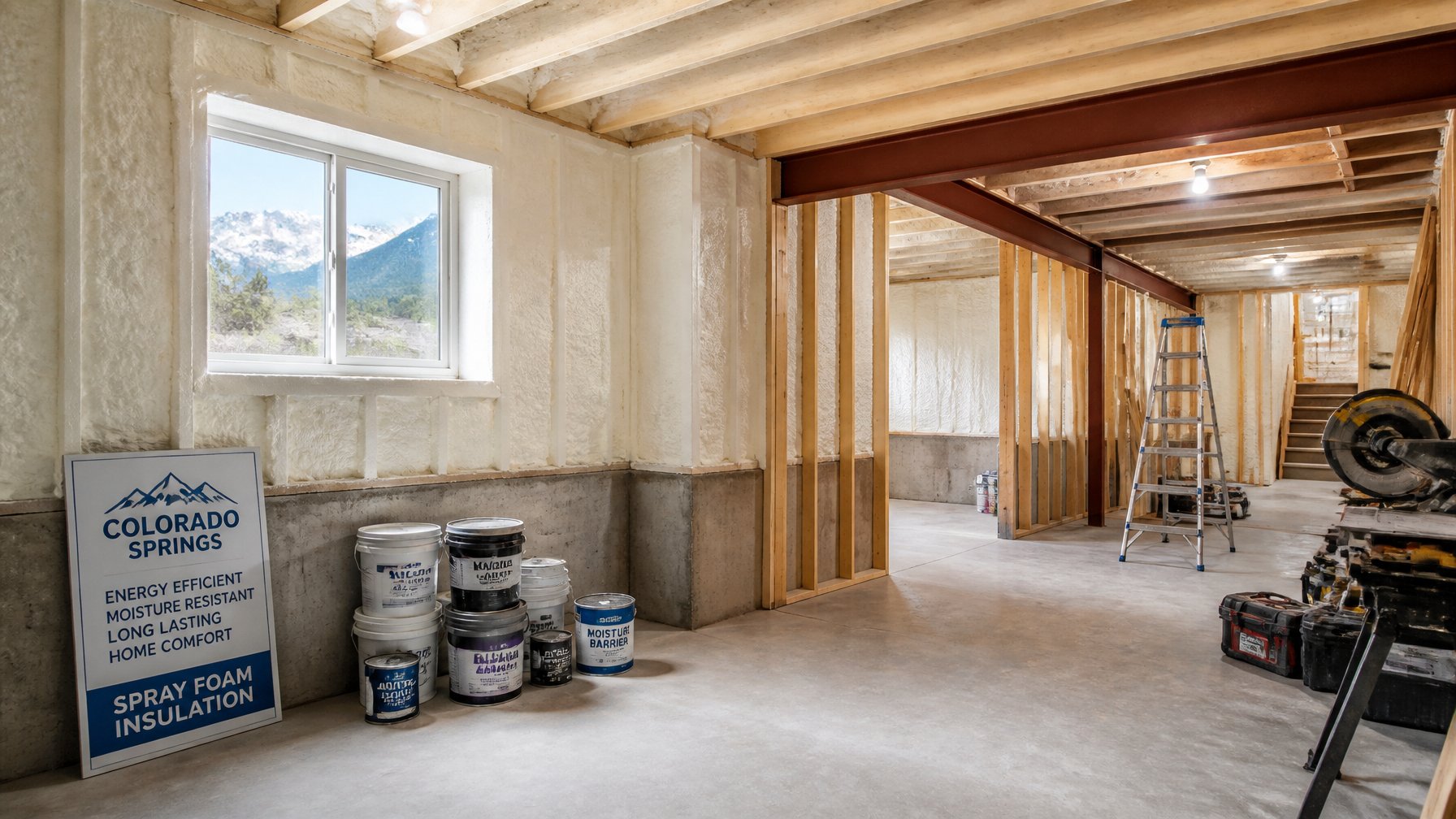
Closed-cell spray foam seals gaps and resists water, which helps keep basements drier in Colorado Springs' variable climate. Homeowners should compare R-value per inch and water absorption rates between products.
Ask contractors about vapor barrier needs and whether the foam meets local building codes. The tradeoff is cost versus long-term performance: closed-cell costs more but adds structural rigidity and better moisture control than fiberglass.
They should also check ventilation plans because foam can change airflow and indoor air quality. For more on basement systems and services, see the homepage.
2) Engineered hardwood-look luxury vinyl plank flooring
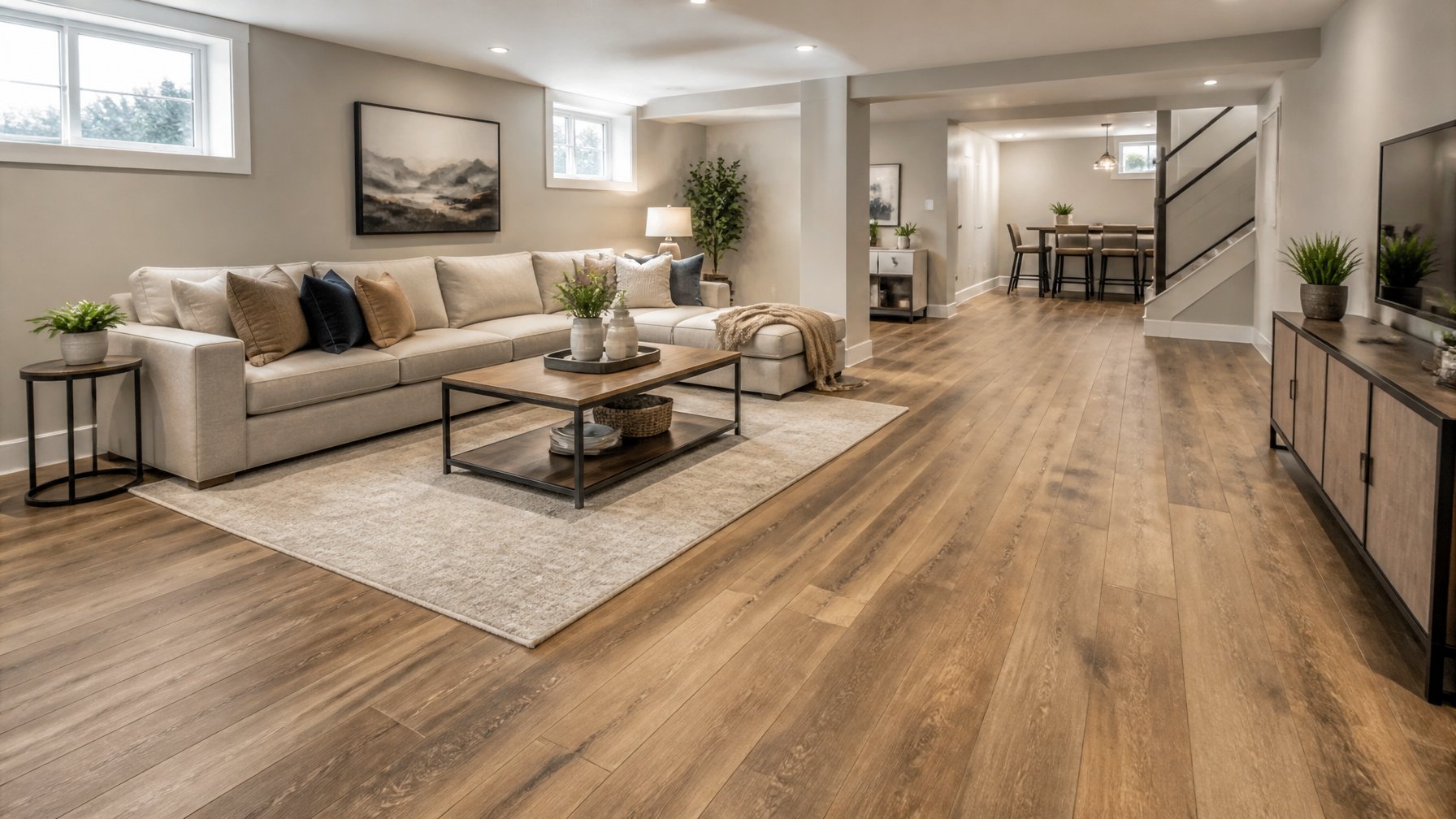
They should pick luxury vinyl plank (LVP) that mimics hardwood but stands up to Colorado Springs’ dry air and temperature swings. Homeowners compare wear layer thickness, core type (WPC vs SPC), and water resistance to match traffic, pets, and occasional damp basements.
Ask about underlayment needs, installation method (click-lock vs glue), and whether the product needs a moisture barrier. Expect a tradeoff: thicker wear layers and rigid cores cost more but last longer and feel more solid.
They should also balance color and texture choices with ceiling height and light; lighter tones make low basements feel larger. For more guidance on flooring options and installers, visit the homepage.
3) Textured acoustical ceiling panels for sound control
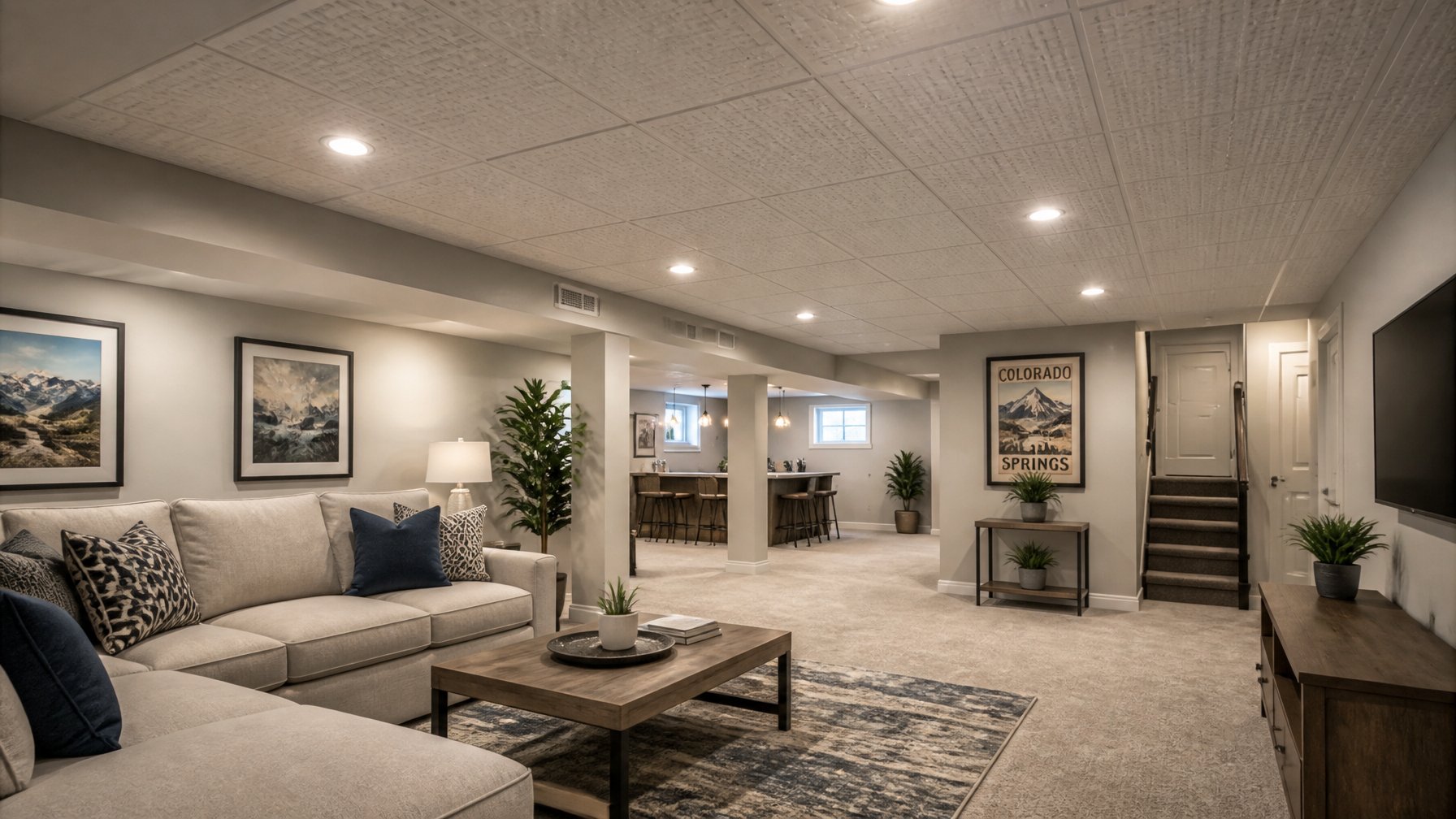
Textured acoustical panels help reduce noise from foot traffic, TV sound, and HVAC. Homeowners should compare noise reduction ratings (NRC) and panel thickness to balance sound control with ceiling height loss.
Ask about fire ratings and moisture resistance for Colorado Springs basements. Panels with gypsum cores resist humidity better but cost more. Decide between drop-in tiles for easy access or adhesive-mounted panels for a cleaner look.
Consider texture and color to hide imperfections; eggcrate or slate textures mask seams. Trade off between aesthetics and maintenance: smoother panels are easier to clean, textured ones perform better acoustically.
They can install over existing framing or a suspended grid. For installation help or finishing services, see basement finishing.
4) Built-in dry bar with beverage fridge and quartz countertop
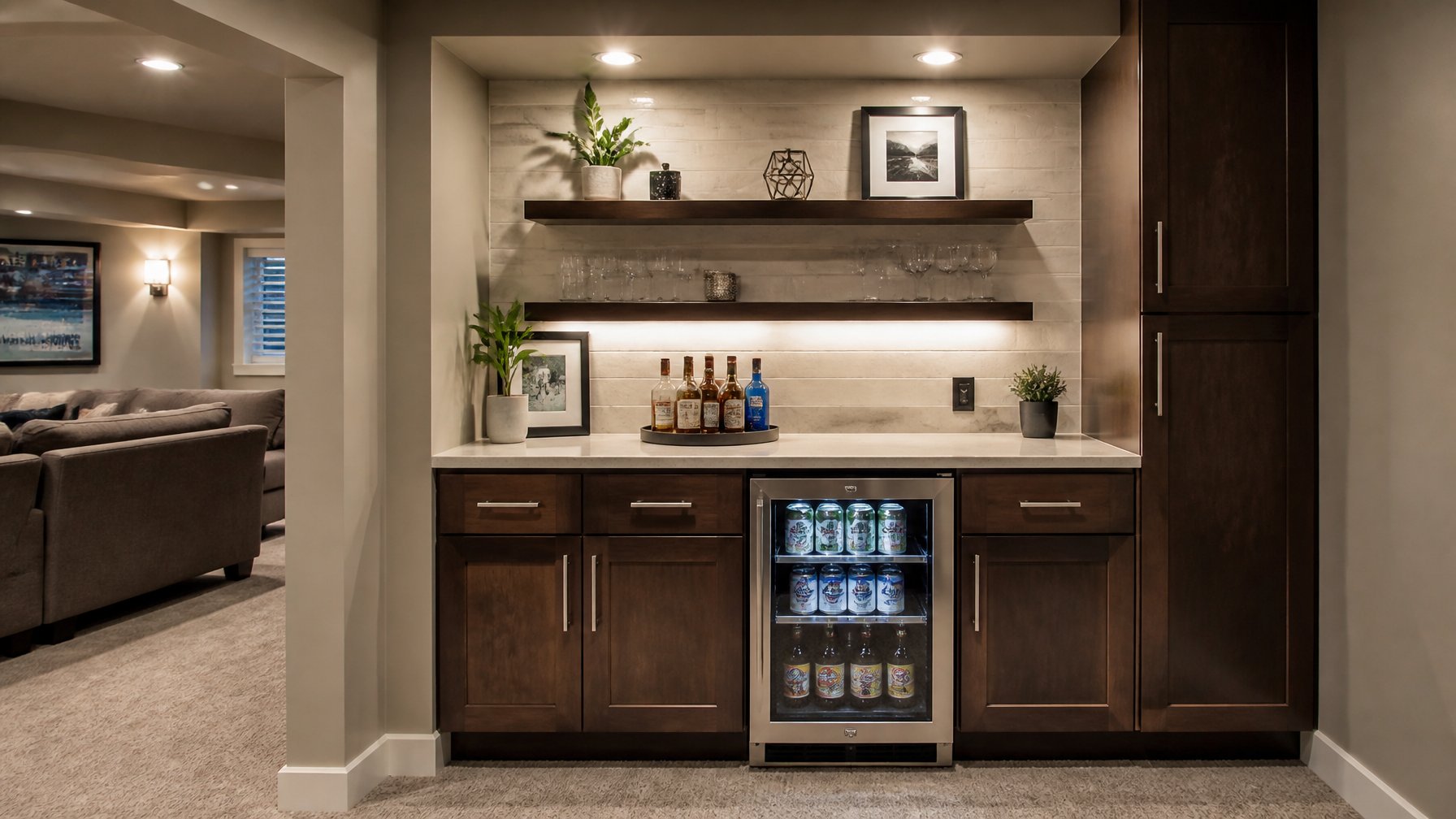
A built-in dry bar gives homeowners a neat drink station without plumbing work. They should compare fridge size, door swing, and energy rating to fit the bar layout and cooling needs.
Choose a quartz countertop for low maintenance and stain resistance. Ask about edge profiles and thickness; thicker slabs look heavier but cost more and need stronger supports.
Consider storage tradeoffs: open shelving shows glassware, while drawers hide accessories. They should decide between full cabinets or a mix of cabinets and cubbies for bottles and snacks.
Plan lighting and outlets. Ask the installer to add dimmable LED undercabinet lights and dedicated circuits for the fridge and small appliances.
For installation help and design ideas, visit Basement Finishing Services.
5) Egress window well with basement-safe escape ladder
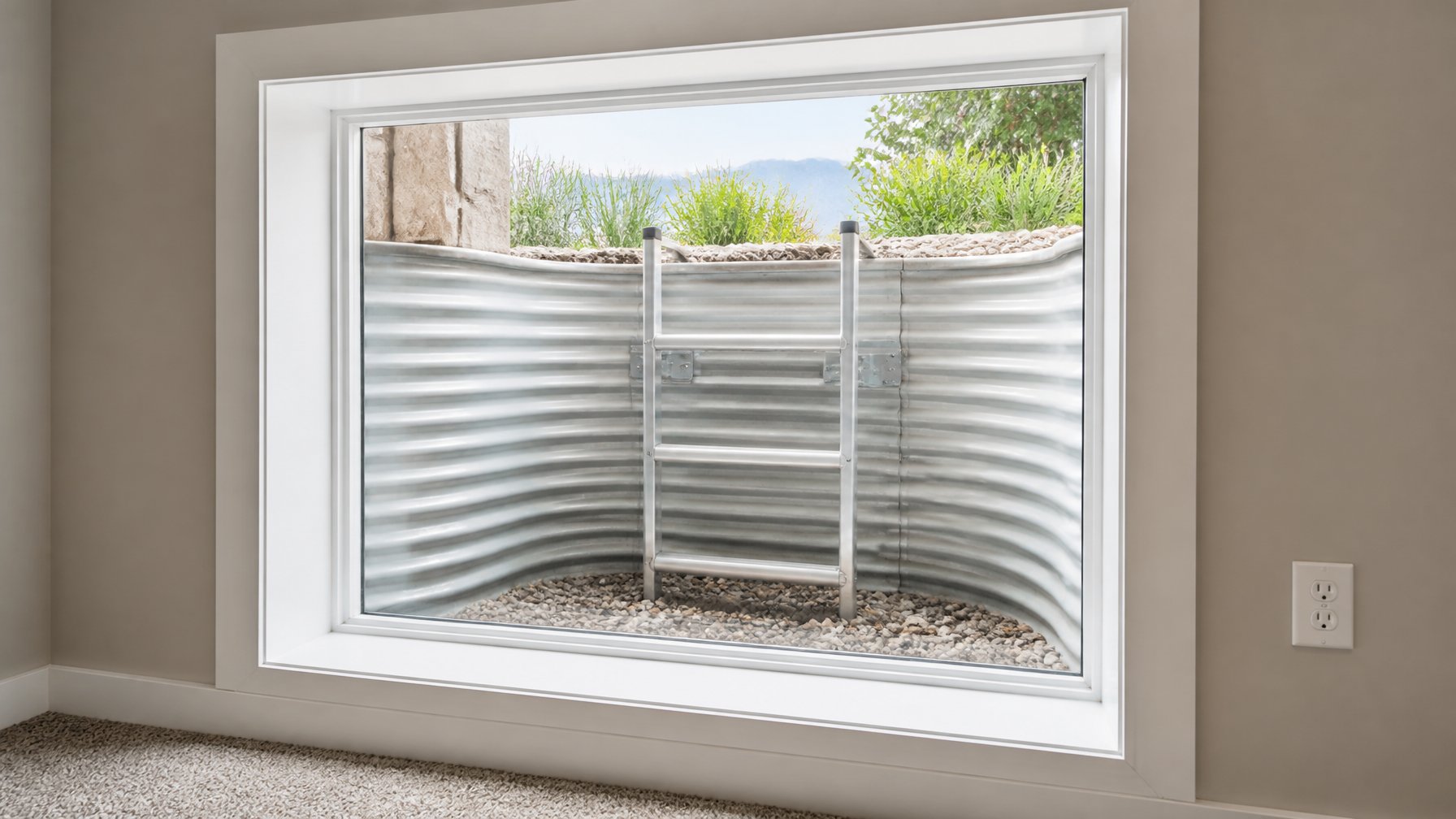
An egress window well adds light and a legal exit for basements. Homeowners should compare window size, well depth, and material—steel wells last longer but cost more than plastic. Ask about local code minimums for clear opening and distance to grade.
Choose a ladder rated for basement use and corrosion resistance. Check ladder height, step spacing, and if it folds or mounts permanently. Tradeoffs include a low-profile look versus easier climbing.
Plan waterproofing and drainage around the well. They should ask about flashing, a drain or sump tie-in, and window well covers that shed snow and debris. For more home project guidance, visit the basement finishing service page.
6) Zoned mini-split heat pump for efficient basement heating
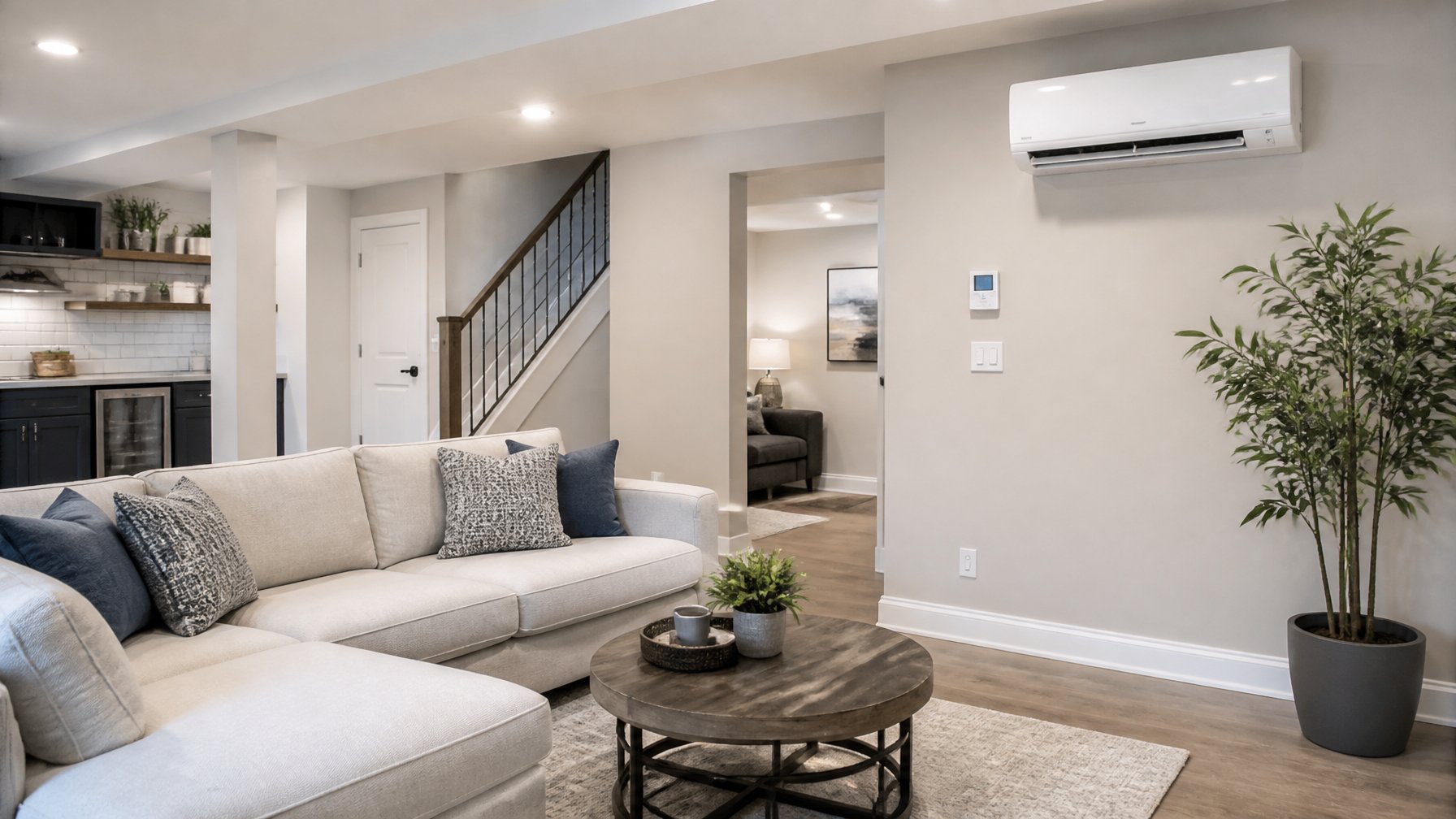
A zoned mini-split lets homeowners heat the basement independently from the rest of the house. They should compare SEER and HSPF ratings, and ask about noise levels and recommended line set lengths.
Installers can place one outdoor compressor with multiple indoor heads to serve finished rooms and a bonus space. Homeowners should weigh upfront cost versus lower operating bills, and check for rebates or local incentives.
They should ask the contractor about proper sizing for basement heat loss and the need for a condensate drain or a primary drain pan. For more on efficient HVAC upgrades, see the homepage.
7) Custom wet bar with undermount sink and glass-door cabinets
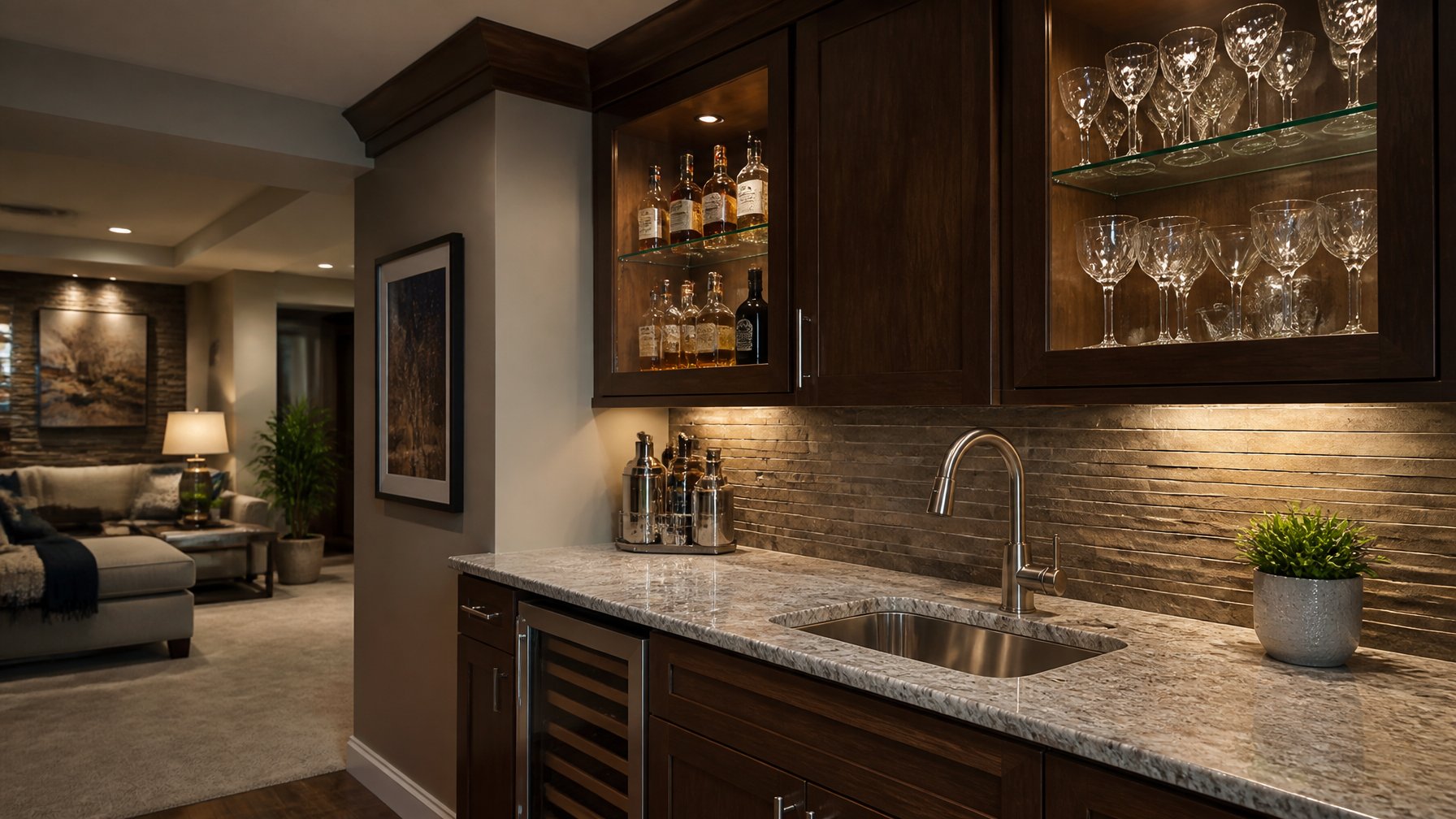
A custom wet bar adds function and style to a Colorado Springs basement. Homeowners should compare materials like quartz vs. granite for durability and cost, and choose an undermount sink for easy cleaning. Ask about cabinet depth and plumbing access, and weigh the tradeoff between compact layouts and full-sized appliances.
Glass-door cabinets show glassware but also need good lighting and organized storage. They should ask the builder about hinge quality and soft-close options, and whether tempered or laminated glass fits their budget. Consider adding task lighting and a small beverage fridge for convenience.
They should check ventilation and moisture control in basements to protect wood and finishes. For design ideas and services, visit the homepage. Images should show realistic home-improvement scenes: a compact counter, undermount sink, glass-front cabinets, and soft lighting.
8) Recessed can lighting with dimmer zones and LED bulbs
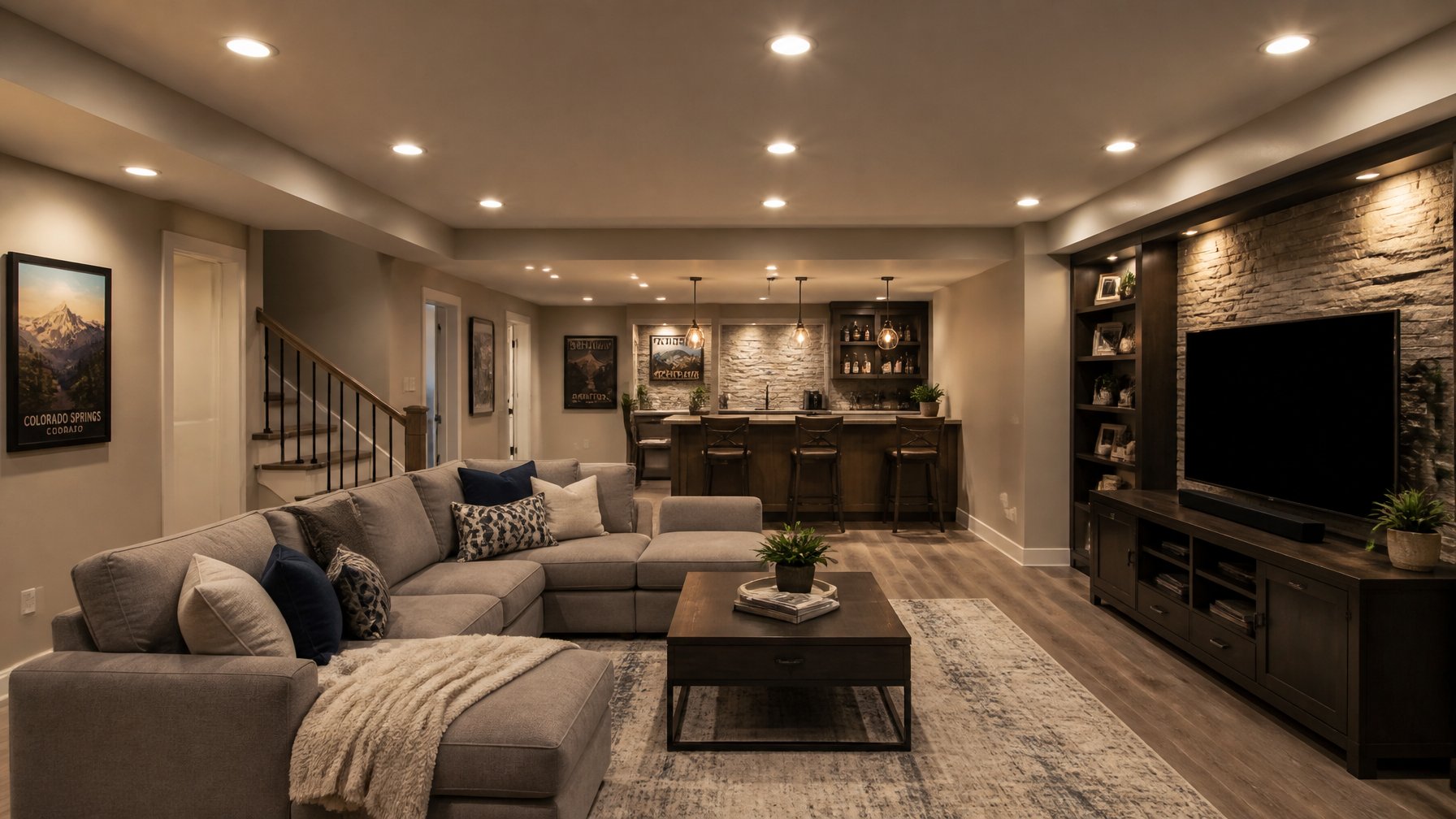
They should plan recessed can layout for even light and few shadows. Compare spacing based on ceiling height and beam angle, and ask an electrician about spacing and ceiling insulation contact (IC) rated fixtures.
Choose LED bulbs for low heat and long life. Compare color temperatures (2700K–4000K) and lumen output for task vs ambient light. Use dimmer-compatible LED drivers and confirm the trim style matches the ceiling.
Create dimmer zones to control mood and function. Place separate switches for the TV area, bar, and workbench. Ask about multi-location dimmers if they want the same control from several spots.
Consider energy and future costs. LEDs cost more up front but cut power use and bulb changes. For professional help and related services, see the homepage.
9) Modular composite basement stair runner for durability
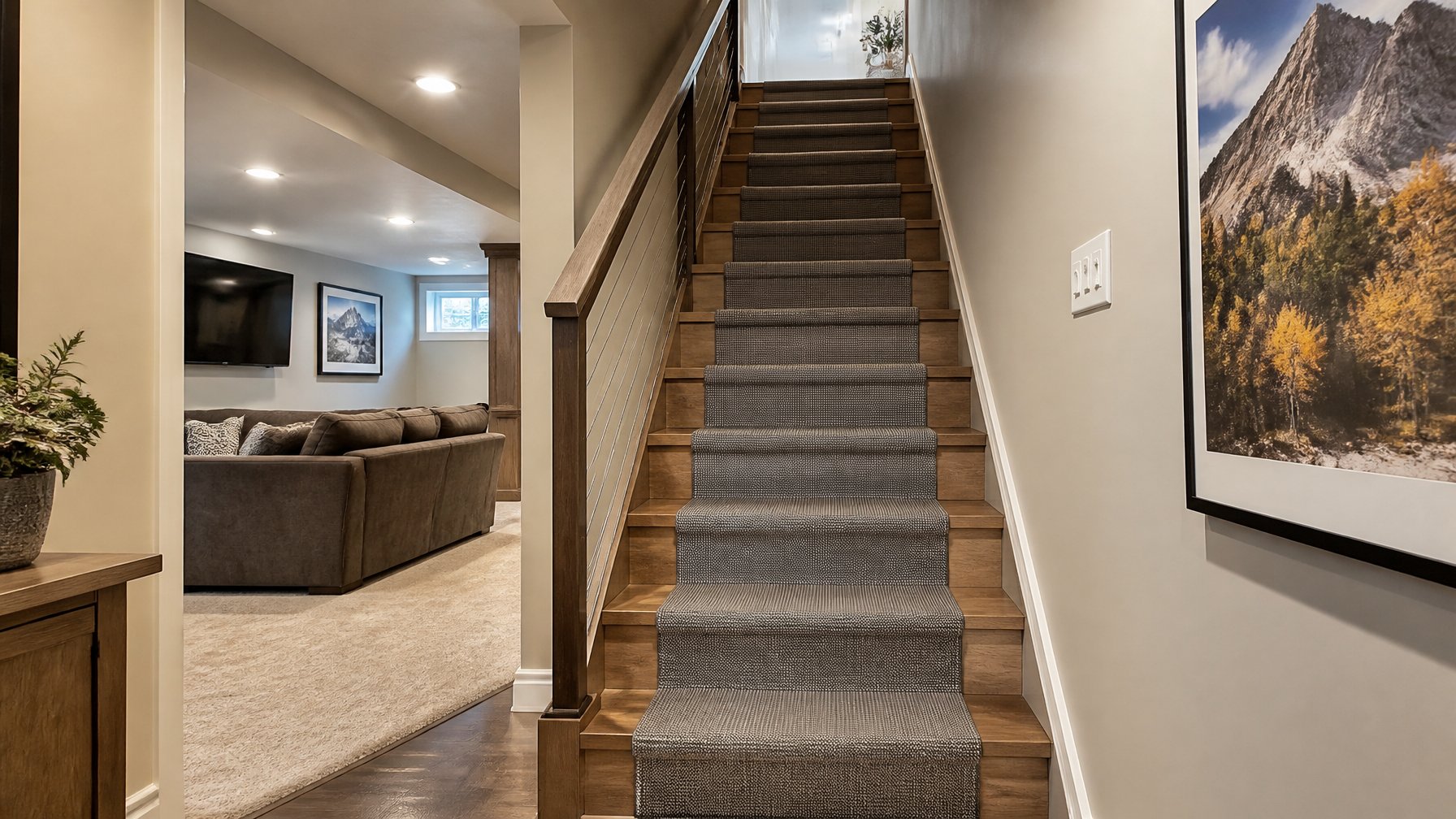
A modular composite stair runner protects treads from wear and water. Homeowners should compare slip resistance ratings, thickness, and connector types to pick a runner that fits their stairs and local moisture levels.
Ask about installation method and noise reduction. Some systems clip together, others glue down; clips are faster but may shift, while glued runners stay put but are harder to replace.
Think about maintenance and replaceability. Choose a color and texture that hides dirt, and confirm individual pieces can be swapped if damaged to avoid full replacement.
See the homepage for more basement finishing services and product options.
10) Durable epoxy garage-style floor coating in neutral gray
A neutral gray epoxy coating makes a basement floor tough and low-maintenance. Homeowners should compare solid epoxy vs. polyaspartic systems for cure time, UV resistance, and smell during application.
Ask contractors about surface prep, moisture testing, and warranty length. The tradeoff is faster cures cost more but reduce downtime; slower systems may be cheaper but need longer ventilating and curing.
Pick a satin or low-gloss finish to hide scuffs and help light reflect. They should request sample swatches and check slip resistance ratings for safety.
For installation tips and related services, see Basement Finishing. Realistic photos help set expectations; they should look like typical home-improvement shots, not staged marketing images.